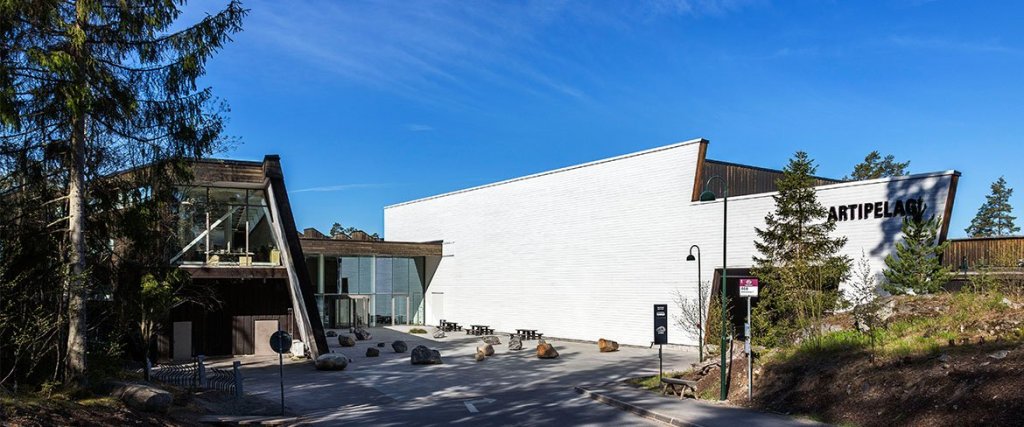
Spring may be in the air, but a chill north wind is whipping across the Swedish island of Värmdö, forcing its way remorselessly through my coat, as I follow an echoing wooden walkway through the trees towards Artipelag.
My destination is well worth a few chilled fingers, however. Set on a hill overlooking the glittering waters of the Stockholm archipelago, from which it gained its name, this modern gallery and artspace appears to be attempting to merge with its surroundings; its wood and stone façade peeping out unexpectedly among the whispering pines.
Inside, amid welcome warmth and slanting sunlight, I meet up with gallery director Bo Nilsson, who confirms that melding design and nature is all part of the gallery’s grand plan.
Standing by one of numerous floor-to-ceiling windows that make the most of the clear northern European light, we have a literal bird’s eye view through the trees.
“The gallery was built from stones and wood that come from this exact place. That’s important because it’s in keeping with principles of Swedish design,” Nilsson says. “You have to remember that, until quite recently, this was a poor country so it always made sense to use what was available where you were.”
“Essentially minimalist”
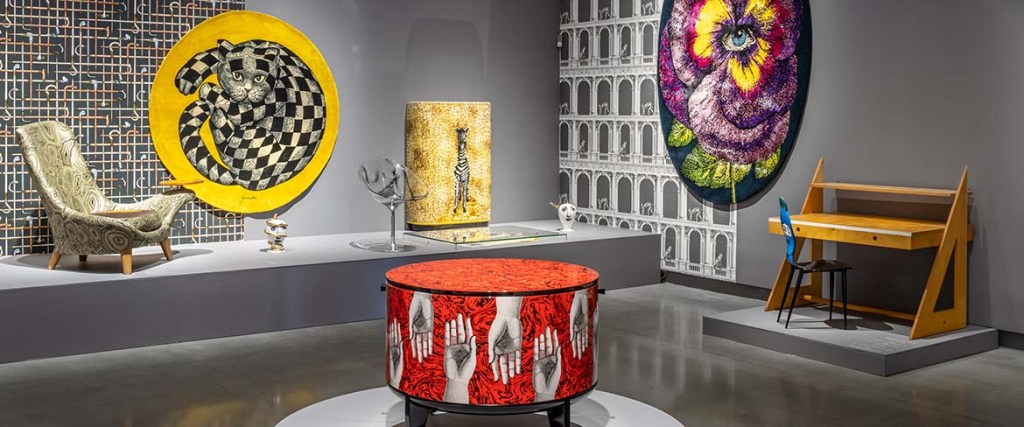
Around us white and pale grey walls offset the bright colours of an exhibition focused on the work of local fashion designer Lars Wallin, while simple wooden benches provide the option of either looking inside or out.
Even the style of these seats has been carefully considered, Nilsson adds: “They’re essentially minimalist, because in the tradition of Swedish design there weren’t any materials to spare to add any grand Baroque touches or anything like that.”
I’m reminded of Nilsson’s comment a few hours later when, back in central Stockholm, I head for the upmarket Östermalm district. Here, set in a grand, early 20th-century building overlooking the waters of the Nybroviken bay, is possibly the city’s most famous design store, Svenskt Tenn.
Founded in the 1920s, the store is today owned by the Kjell and Märta Beijer Foundation, an institute that combines ecological and medical research with preserving Sweden’s interior design traditions.
Part of Svenskt Tenn’s distinctive appeal is down to former chief designer Josef Frank, whose furniture still features prominently in the store’s portfolio and whose textile and wallpaper designs provide its distinctive signature look; an unexpected, and one might at first think rather un-Swedish, riot of natural forms and colours, filled with exotic flowers, birds and butterflies.
Those patterns make a welcome appearance in the store’s delightful, second-floor tearoom, Tesalongen. Here, I am fortunate enough to sink into a relaxed, rattan armchair to sample Swedish rye bread sandwiches, homemade jams and cakes that are veritable works of art in their own right.
The tea itself arrives in an immaculate white pot bearing the scrolling Svenskt Tenn logo. It would be all too easy to spend a few hours here, sampling the comfort levels of different pieces of iconic furniture while enjoying the views of the bustling boats out in the bay, but instead I head back out into the wind and take a short walk past the elegant storefronts of Sibyllegatan to the Modernity gallery.
The lure of the 20th century
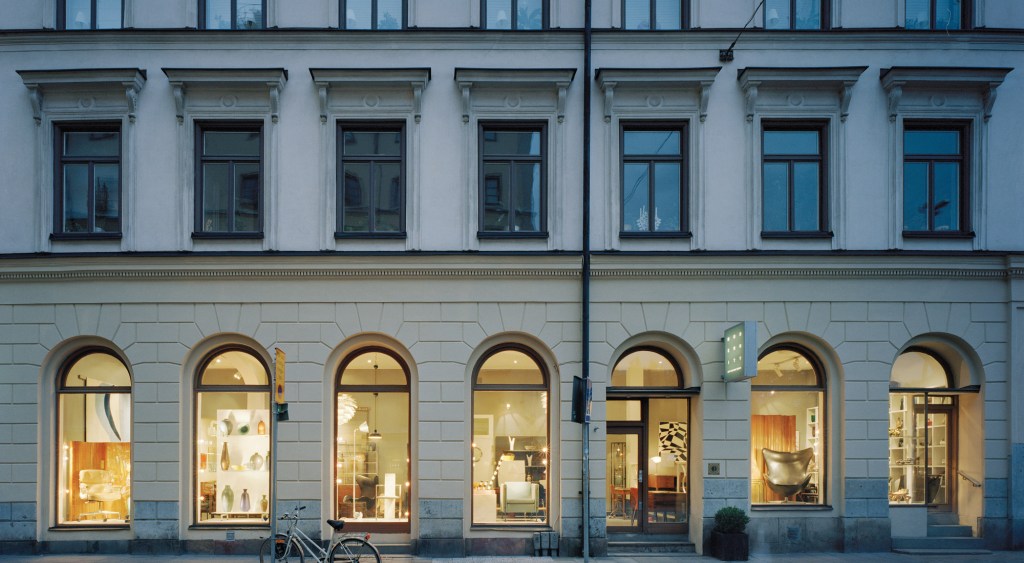
The phrase ‘Aladdin’s Cave’ probably gets used rather more than it should, but in the case of Modernity it’s appropriate. Within its precincts is a neatly arranged cornucopia of largely 20th-century objects, from chairs and tables, to lamps and glassware.
Director Andrew Duncan, an expatriate Scot, is happy to tell the story behind his wares, emphasising how Swedish design enjoyed its first big breakthrough at the Paris Exhibition of 1925, when its low-key elegance entranced the creative world.
We stop in front of a simplistic, solid-looking wooden armchair with a rounded back and two metal stays around its middle – reminiscent, to me at least, of a traditional beer barrel. This, Duncan explains, is the work of Axel Einar Hjorth, formerly chief designer for the department store NK (still doing business just a 10-minute walk away). Hjorth, he adds, produced many of the major pieces for that 1925 Paris design show, but was then criticised for becoming too ornate and upscale in his approach – something that was frowned upon in the Sweden of the 1930s.
“He took that criticism to heart,” continues Duncan, “Afterwards he focused on producing a range of neat, simple pine furniture for Swedish country houses. Then his work went out of fashion again. Until about 15 years ago Swedes weren’t really keen on it at all, but then foreign collectors started showing an interest; incorporating his pieces into chalets in top Alpine resorts, for example, and now items like this are very popular.”
Equally as eye-catching, though for a different reason, is a wall dedicated to displaying vintage glassware, backlit and infused with translucent colour. It’s a reminder that Sweden has been at the forefront of glass design for more than a century, encouraging a long-standing tradition that has brought together artists, designers and craftsmen.
Lasting beauty
That relationship has endured to this day, but to see it in action I have to go on something of a pilgrimage.
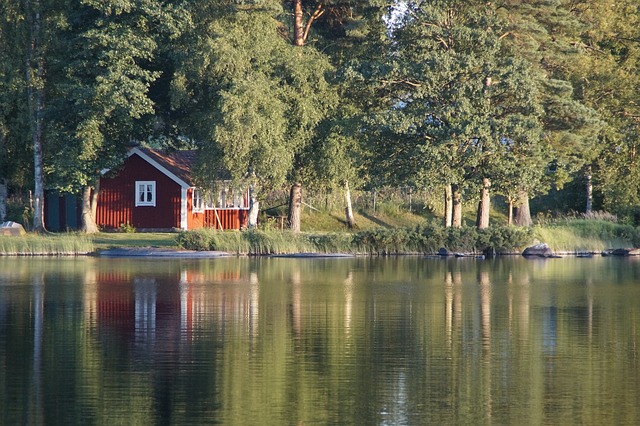
It is almost 500km from Stockholm to the southern province of Småland, but to gain an unforgettable insight into the glories of Swedish glassware, the trip is well worth it – especially as it takes me past a fairytale mosaic of shining lakes and red-painted houses deep into dappled forests of birch and pine.
The firm of Kosta Boda has been producing high-quality glassware in the town of Kosta since 1742 – a date that is set in large numerals high on the company’s rustic-looking, redbrick HQ. Back then, this was the perfect place to set up. The necessary furnaces were always hungry for fuel, so where better to begin than the middle of a vast forest?
Inside the workshops the smell is one of hot metal and steam, while the seemingly ever-running furnaces add a continuous background growl to the creative process. Clad in black and grey overalls, Kosta Boda’s craftspeople and artists, numbered among Scandinavia’s leading glass experts, weave their magic like latter-day alchemists; spinning fantastic shapes from orange-gold globs of molten glass.
On the surface, the glassware’s colourful fragility may seem the anthithesis of the airy minimalism of the Artipelag gallery or the pared-back design classics of the Östermalm district. There is, however, a common, distinctly Swedish, theme at work here and it is this: make the most of what you have, however simple that may be, to produce an object of lasting beauty.
Taking a tour of Swedish design.
Tweet
 Dan Hayes: journalist & writer