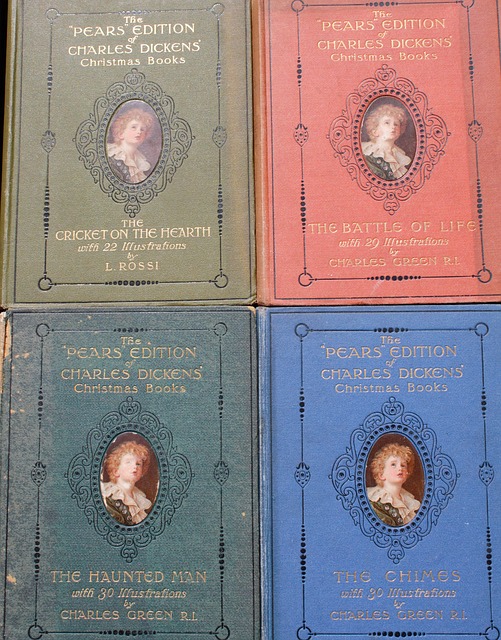
Charles Dickens may have become as integral to a British Christmas as presents, turkey and the Queen’s Speech, but he never had much positive to say about Britain’s legal system and, time and again, his novels make reference to greedy lawyers, confusing cases and a system mired in self-serving delay.
His criticism was founded in part on personal experience. As a young man he worked first as a legal clerk and then as a court and parliamentary reporter, roles that gave him valuable insights into the way the system worked (or didn’t).
Perhaps this is why the lawyers that populate his pages tend to be such a grim bunch: the bullying Jaggers, the villainous Tulkinghorn and the repellent Vholes (“a sallow man with pinched lips that looked as if they were cold”) to name but three.
And there is an irony to all this, as Richard Jones, a Blue Badge tour guide and author of a book entitled Walking Dickensian London, explains.
“Many of his best friends were lawyers and Dickens himself, when things were going wrong for him as a writer, enrolled in one of the Inns of Court thinking he might become a barrister. But I think that, going back to Shakespeare’s time, it’s been fashionable to have digs at lawyers and Dickens picked up on that.
“Then as now, most people rarely have any dealings with the law but, when they do, drawing up a will or buying a house for example, they might well be surprised by how much they are charged. Dickens knew that and was playing to the gallery.”
Debtors’ prison
Emma Matthews, a former barrister who now also holds the coveted Blue Badge as a London guide, agrees: “His childhood experiences had coloured his impression of the law and lawyers. His father was arrested for debt and locked up in the Marshalsea prison in Southwark, which meant Dickens himself had to go and work in a factory at the age of 12.”
Jones adds: “I expect payday loans would be worryingly familiar to him; where debts increase and increase until people just can’t keep up. That is the sort of thing that happens to some of his characters and behind it all, in his books at least, were the lawyers.”
Dickens reserved some of his harshest criticism for the Court of Chancery; fog-shrouded setting for much of Bleak House and the oft-quoted case of Jarndyce v Jarndyce, which becomes so bogged down in its legal machinations that a disputed inheritance is entirely swallowed up by fees.
This year’s ongoing delays to grants of probate, prompted by a proposed change to legislation that never happened, would also be depressingly familiar to the writer, Jones suggests, as would ongoing issues related to access to justice.
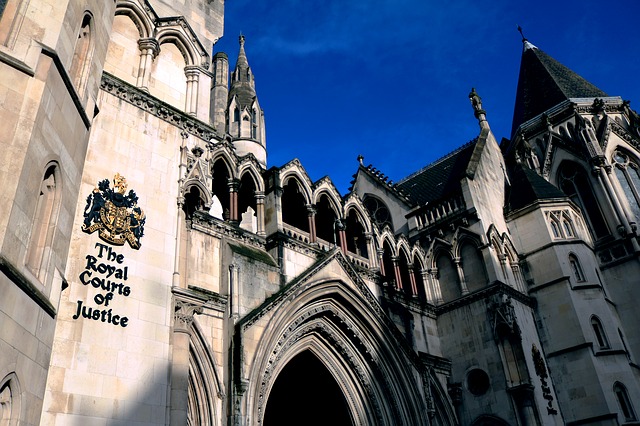
“Dickens would be horrified by the way in which people’s civil rights have been whittled down by the sly changes made in parliament since austerity began, such as in legal aid,” Jones says. “I think he’d really go to town with that. I used to take tours to the Royal Courts of Justice and every court would be full. Today you’re lucky to see one or two in action.”
Matthews adds: “The civil legal aid system is virtually non-existent now, so in that respect we’ve come in a full circle through very generous legal aid provision, to an era of cuts and conditional fee arrangements.”
The wickedness of crowds…
For Dickens, who campaigned for legal progress, any idea that the system might be going backwards would be as hard to swallow as a plateful of cold workhouse gruel.
A vigorous campaigner for the abolition of the death penalty, he witnessed the execution for murder of husband and wife Marie and Frederick Mannings in 1849, a spectacle he found deeply disturbing. In a letter afterwards to The Times, he wrote: “I believe that a sight so inconceivably awful as the wickedness and levity of the immense crowd collected at that execution this morning could be imagined by no man.”
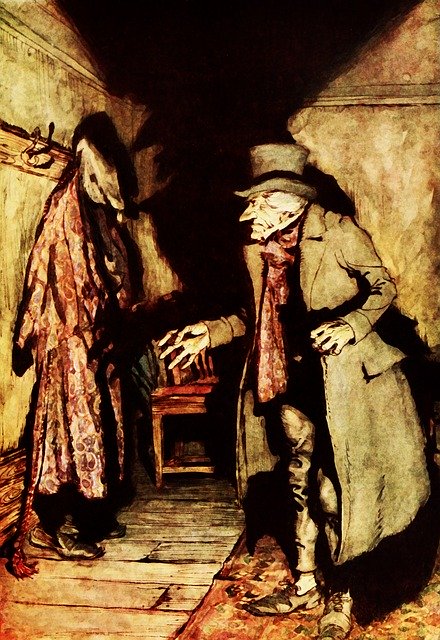
Dickens also felt that the whole process encouraged more crime, with pickpockets getting to work among the distracted crowd, a role he would later give to Fagin’s squad of vulnerable children turned gang members in Oliver Twist.
And the similarities between then and now don’t end with crime and punishment, adds Jones.
“When the Supreme Court ruled last September that Boris Johnson had acted unlawfully in suspending parliament, I found myself wondering what Dickens would have made of it all. Ultimately, I decided he would have been on the side of the Supreme Court. He didn’t really trust politicians, although he didn’t have much trust in the legal system either.”
It may be that Jones wasn’t alone in letting his thoughts wander to the famous English novelist that day.
“The word Johnson used in Parliament to opposition MPs was ‘humbug’,’ he adds. “A lot of people think he used it to mean ‘nonsense’, but it actually has a very specific meaning when Scrooge uses it in A Christmas Carol and that was a fraud or a sham. Johnson knows a lot about words and I expect he meant it in that way.”
Three of the best Dickens sites
No.1 South Square, Gray’s Inn: the building where Dickens went to work as a 15-year-old legal clerk for the firm of Ellis and Blackmore still stands and is one of the few in the area to have survived the Blitz.
Westminster Hall: where Dickens worked transcribing parliamentary debates, for example the Poor Law debate of 1834, and where he went following the publication of his first work (A Dinner at Poplar Walk).
The George and Vulture tavern, 3 Castle Court: Dickens knew this wood-panelled establishment when it was a pub, rather than the restaurant it is today, and it makes several appearances in The Pickwick Papers.
Would Charles Dickens recognise the legal issues of the 21st century?
Tweet

