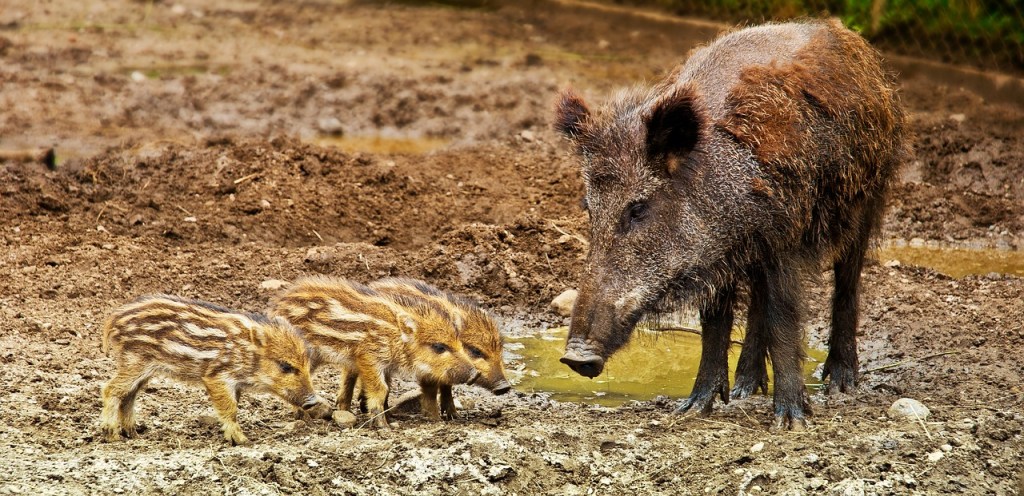
Recent news concerning the escape of herds of deer and wild boar has raised the question of potential legal issues that may surround landowners “rewilding” their estates. These particular animals made their bid for freedom (ironically during the lockdown period) from the Somerset estate of Defra board member, and rewilding enthusiast, Ben Goldsmith, brother of the environment secretary.
Mr Goldsmith later compounded his error by admitting that photos of the recalcitrant deer being rounded up were fake and that he had been “bullshitting” his neighbours about the animals’ recapture.
Environmental lawyers suggest the episode, which is currently under investigation by Avon and Somerset Police, highlights some of the ongoing issues around re-wilding the countryside or promoting what Mr Goldsmith refers to as “wilder farming”, where habitat creation and species reintroduction join forces with less intensive food production.
“Any landowners who want to re-wild need to be very careful about what sort of animals they are introducing,” says Simon Pring, a partner at Farrer & Co, pointing out that wild boar are subject to the Dangerous Wild Animals Act, 1976, and that various Deer Acts make numerous stipulations about the keeping of deer. “And they need proper fencing, as Mr Goldsmith has found out.”
Space shortage
With one or two notable exceptions, such as the 3,500-acre Knepp estate in West Sussex, England’s lack of wide, open spaces has limited large-scale re-wilding ambitions. Even so, there is perhaps more interest now than ever from landowners, farmers and government alike in how farming can contribute sustainably to biodiversity and habitat creation.
Such worthy goals have also seemingly been promised by post-Brexit environmental and agricultural legislation, although exactly what this might include remains something of a mystery, as Deborah Sharples, a partner at Birketts points out.
“There is real uncertainty at the moment because EU subsidies for farmers are being replaced by the environmental land management scheme (ELS). There is no great clarity, however, about what that is actually going to comprise and how payments are going to be made.”
“Farmers remain very uncertain about how much they are going to get and what they are going to get it for. Just based on its name, though, it seems very likely there will be payments for enhancing biodiversity. But we don’t know whether someone would be paid, for example, if they turned over the whole of their farm to environmental enhancement or whether they would still have to be farming.”
Payments for “greening”
Pring agrees that the government’s upcoming legislation will tie payments to “greening” schemes. “That’s a rather nebulous concept, though I’ve no doubt it will develop, with single farm payment grants increasingly linked to environmental improvements.”
In theory, such measures should also help with the reintroduction of species that have either gone extinct in the UK or have seen their numbers radically reduced, although this is a proposition that, despite successful programmes focused on species such as the red kite, is far from straightforward.
For example, Natural England has recently considered a proposal to reintroduce hen harriers, a medium-sized bird of prey, from Spain into areas of southern England.
The birds are a native species and occur naturally in this country, but a number of potential issues with the plan have been highlighted by pressure group Wild Justice, as Carol Day, consultant solicitor at Leigh Day, explains: “The concern was that the birds would be introduced into the south, but then fly north [to sporting estates] where they risked being shot. The International Union for Conservation of Nature’s (IUCN) guidelines stipulate species shouldn’t be reintroduced unless they are going to be safe and Wild Justice felt that money spent on the project could be better allocated to clamping down on wildlife crime, for example.”
Day also suggests the coronavirus pandemic has further thrown open debate about land use, rewilding and the wider role of the countryside. Research from Natural England, for example, has highlighted how important spending time in nature has been to the nation’s mental wellbeing in recent months and its ongoing role in maintaining sustainable health.
She agrees that the regulation ultimately provided by the Agriculture and Environment Bill is likely to be key. “[The government] will allocate public money for public good, but the question is what is the public good? Is it, for example, food production, or is it trying to get some of these species that have suffered horrendous declines back into a favourable position?”
Food supplies under threat
The realities of the pandemic and the uncertainty around what happens next with Brexit have also highlighted issues of food security and the importance of UK food production probably to a greater degree than at any time since the Cold War.
“Covid 19 has brought many of these issues to the fore,” says Sharples. “The difficulty is striking a balance; where we are producing food at the right quality and quantity in the right way while also encouraging biodiversity.”
In that context, the idea of taking a large tract of agricultural land out of production to grow wild flowers might seem foolhardy to some. Not only that, in uncertain economic times, it would require a landowner who, perhaps like Mr Goldsmith, has pockets commensurate with their vision.
“The real thing is you have to be quite rich,” says Pring. “If you take a piece of Grade Two or Grade Three agricultural land and plant trees on it, you halve its value, whereas if you take a tract of poor quality land and plant [trees] it goes up in value. It just depends where the land is. And as for the less productive areas, such as Exmoor or Dartmoor… Well, what would you be wilding? They’re already pretty darned wild.”
 Dan Hayes: journalist & writer