Patrick O’Brian was a man who liked to keep himself to himself. A former Second World War secret agent he would go on to achieve fame and fortune as the author of the Aubrey-Maturin novels, set amid the heroics and horrors of the Napoleonic navy.
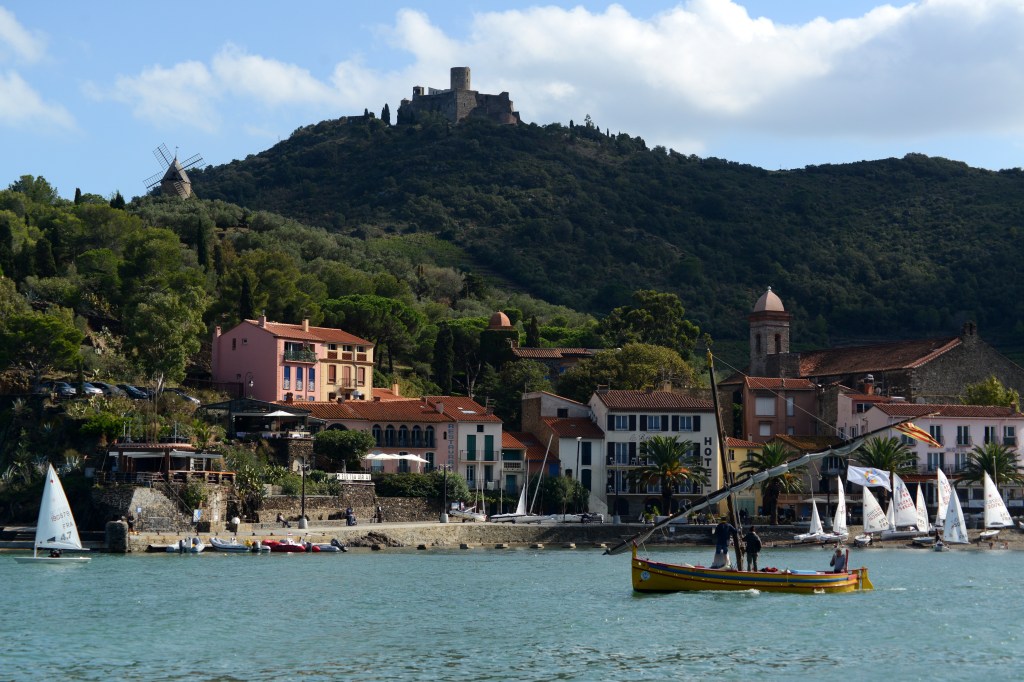
In 1949 O’Brian and his wife, Mary, abandoned the grey, chilly climate of rural Wales, where they had gone to live following the end of the war, and headed to the southern French town of Collioure. At the time they were pioneers, this part of the Mediterranean coast was far removed from the casinos and luxury hotels of Cannes, Antibes and St Tropez and the place was little more than a fishing village, whose brightly coloured boats would head out to sea in search of anchovies, very much a local staple.
Today, while the town is much more on the tourist trail than it once was, it still retains elements of that down-to-earth charm that once appealed not only to O’Brien, but also to A-list painters such as André Derain, Henri Matisse and Pablo Picasso, who came here for the exceptional light and colours as well as the chance to escape the hustle and bustle of Paris.
Lair of the wild beasts
Known as the Fauves, or wild beasts, Matisse and his cohorts experimented with form and composition in a way that shocked some among the artistic establishment, put the town on the map, and also helped preserve it in all its relaxed and understated glory. Even today, you won’t find any high-rise developments or gated communities in this particular corner of France.
Even so, it’s barely possible to turn a corner in Collioure without being reminded of one or other of its artistic former residents. Along the sea front, prints are cunningly displayed to show the background one or other of the painters was looking to portray, while many a bar and restaurant shows off a favourite work or two.
Catalan connections
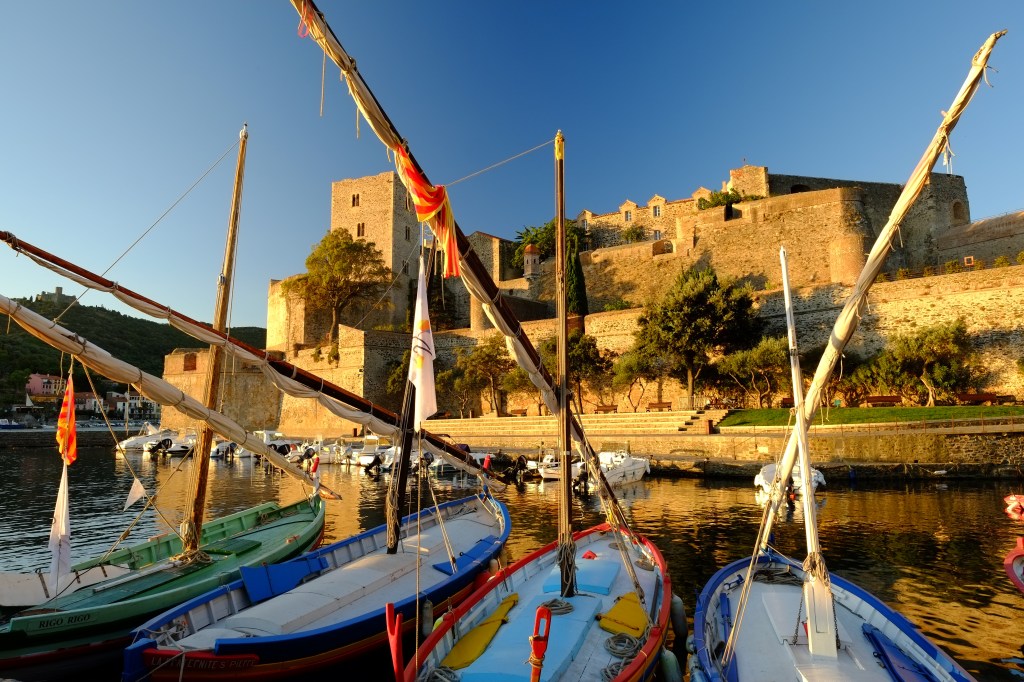
There is an overwhelmingly Catalan vibe to the centre of town; the red and yellow colours of the regional flag making their appearance in everything from bumper stickers to ceremonial banners. France only took ownership of Collioure in 1659 (at the expense of Spain) and the casual observer might be forgiven for thinking that at least some of the locals wouldn’t mind striking out on their own tomorrow.
Certainly, those 17th-century French occupiers didn’t pull any punches. They were well aware of the proximity of the Spanish frontier and the questionable loyalty of some of the population and they got straight on with fortifying the town. In came the star military architect of the day, Sébastien Le Prestre de Vauban, who oversaw the creation of walls, ramparts and ditches and the transformation of Collioure into a heavily defended garrison.
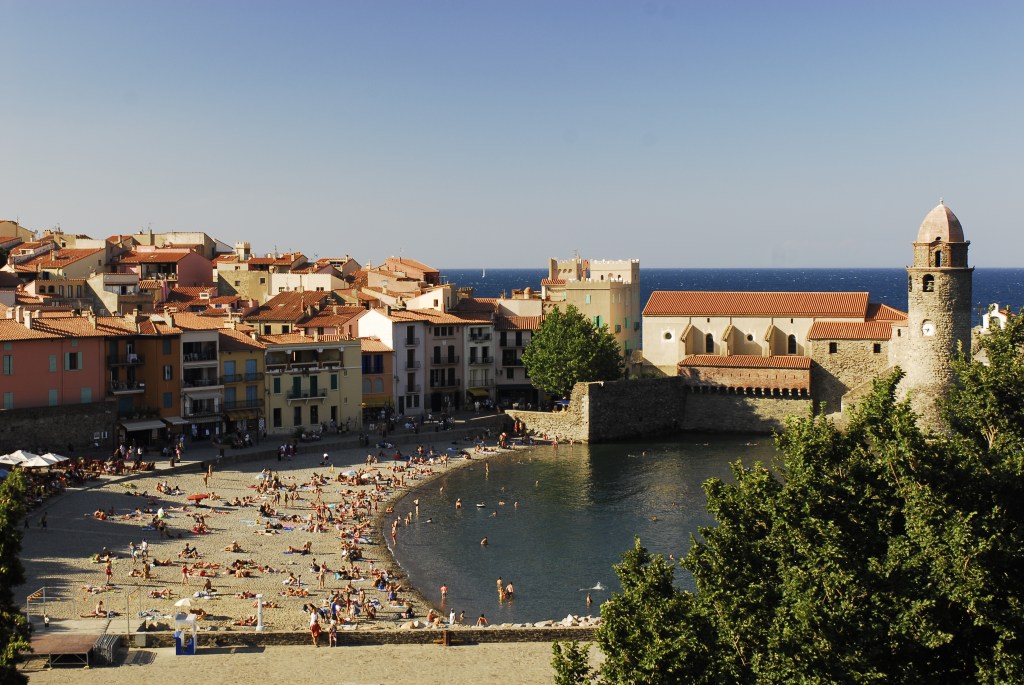
Not only that, but the powers-that-were apparently left the inhabitants minus one formal place of worship for the best part of 20 years. At least when they finally got around to installing a replacement they let their creativity have free rein. With its quaint round tower and position overlooking the beach and its year-round swimmers, Notre-Dame-Des-Anges is today a symbol of the town, its form captured by Matisse in one of the best-known paintings he produced during his stay here.
At the other end of the beach and helping make this a particularly memorable venue for a swim is the hulking form of Château Royal. Originally built by the Knights Templar in the 13th century, it has been successively home to the Kings of Majorca, assaulted by the real-life d’Artagnan, whose name was immortalised by Alexandre Dumas in the Three Musketeers, and pressed into service as an internment camp for refugees fleeing the Spanish Civil War in the 1930s.
Artists and fishermen
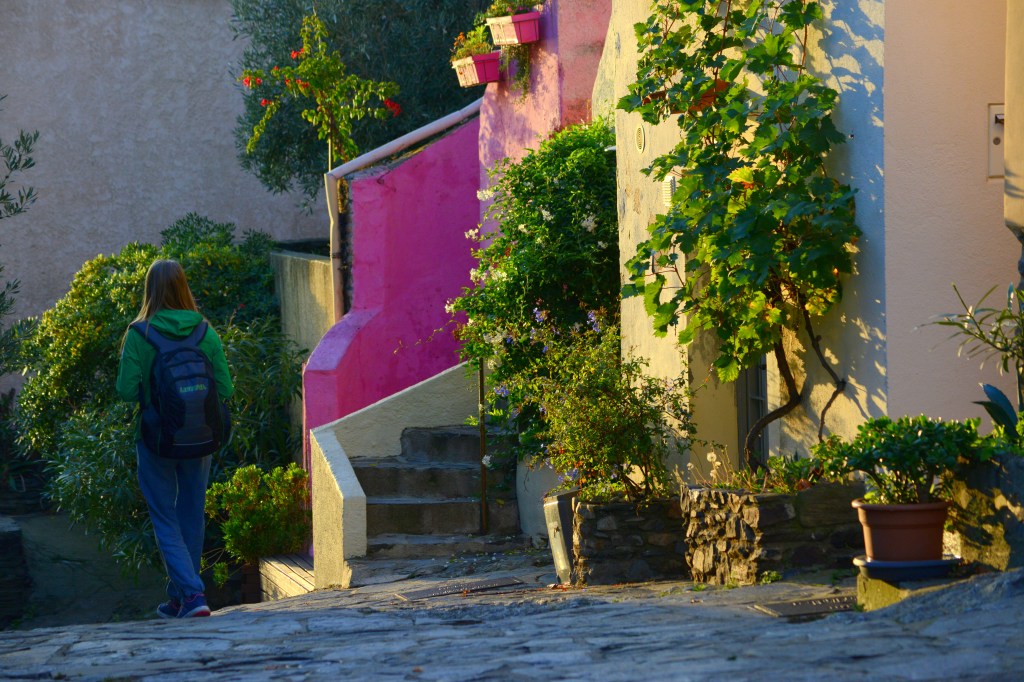
If you would rather lighten the mood, simply stroll away from the harbour and the beach, passing charming houses with coloured doors and shutters strive to outdo each other for rustic appeal. More than 50 artists are said to live in Collioure today and it is easy to see where they get some of their inspiration. A 20-minute walk brings the visitor back to the centre of town and a visit to Maison Roque, a firm that is keeping alive a local tradition in the shape of curing and salting anchovies.
Once upon a time these sharp-tasting little fish were so important to the local economy that French kings waived the Gabelle, their highly lucrative and also highly divisive salt tax, in these parts so these tasty morsels might be adequately preserved and shipped off to the tables of the rich and powerful.
Today, Roque’s premises comprises a small shop whose shelves positively groan under the weight of beautifully packed and presented goodies and an upstairs factory where highly skilled workers turn the humble task of preparing and packing an anchovy into a work of art in its own right.
This heritage also created the local speciality, the Salade Collioure, said by local people to be infinitely superior to the Salade Niçoise, it replaces tuna with anchovies (of course) and features seemingly on every menu in town.
Whether O’Brien was a fan I could not tell you, but I like to think of him ordering one up, perhaps with a glass of something cold and crisp, while looking out to sea and planning the next adventure of Aubrey, Maturin and their shipmates.
Where to stay
Le Mas des Citronniers is a charming small hotel within yards of Collioure’s beach and historic attractions. It offers views of the Royal Castle and features a relaxed courtyard ideal for chilling out with a glass of the local wine.
hotel-mas-des-citronniers.com/fr
 Dan Hayes: journalist & writer